
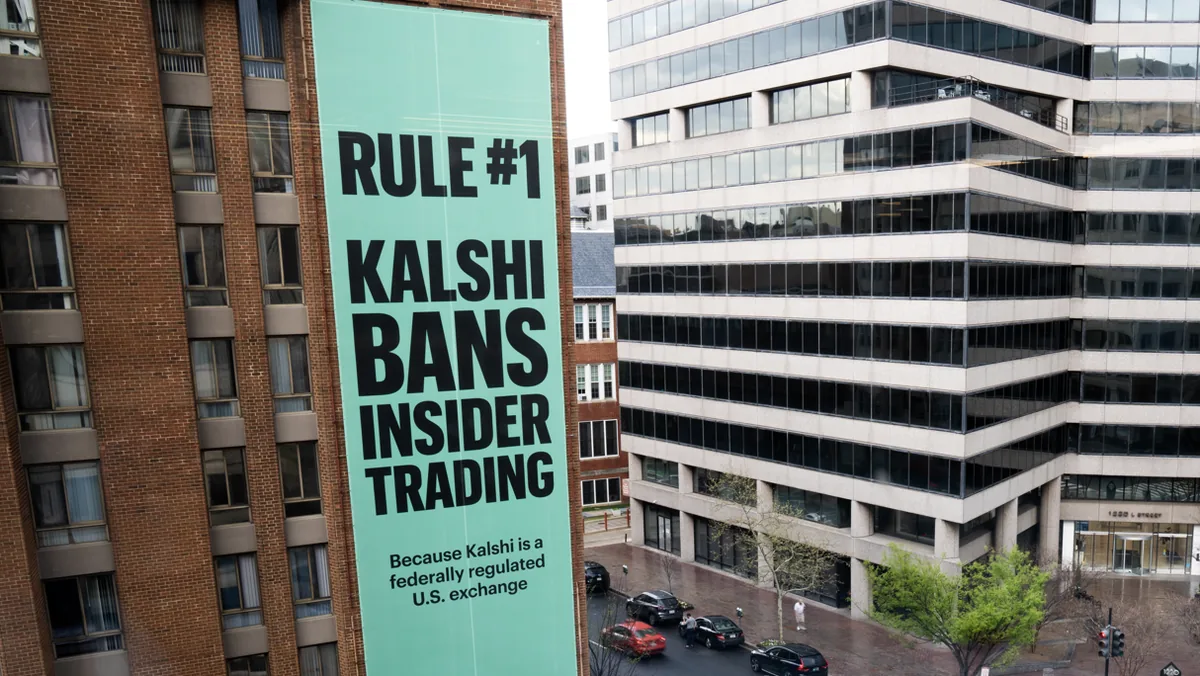
Prediction markets say they're different from sportsbooks. Gambling addicts say it's all the same
This AP story landed at exactly the right moment. The framing is the part most coverage of prediction markets misses: the legal definition and the clinical reality have come completely uncoupled. Kalshi and Polymarket argue their products are not gambling — they’re peer-to-peer trading on event outcomes, regulated as financial instruments, different from sportsbooks both legally and structurally. The therapists treating the people losing on those platforms describe the exact same disordered-gambling cycle they see with sportsbooks: the same anticipation, the same chasing, the same wreckage when the money runs out.
Two clinicians quoted in the piece are worth pulling out. Dr. Cynthia Grant (Birches Health): ‘There may be real differences in how these products are defined or regulated, but in the therapy room, we are often seeing the same cycle.’ Jody Bechtold (The Better Institute): ‘You’re seeing a lot of the same behaviors, whether it’s a prediction market or gambling.’ That is the entire argument in two sentences. A regulator can write whatever swap-and-derivative pedigree they want into the contract structure; the person sitting across from a counselor doesn’t describe their cycle differently because the platform has a CFTC filing.
The volumes underline the urgency. Kalshi traded $2 billion on the 2026 NCAA tournament alone. Polymarket cleared $10.6 million on a single championship game (Michigan-UConn). Bank of America’s projection puts the U.S. prediction-market category at $1.1 trillion in annual volume. If a $1.1 trillion market that lets users wager on discrete event outcomes isn’t a sportsbook, the word has stopped meaning anything useful. We’ve been documenting the regulatory side of this in real time — the Senate’s self-imposed ban on members participating, the CFTC’s ongoing fight with New York over who actually has authority to regulate these platforms, the U.S. soldier indicted for allegedly turning $33K into $409K on insider information. The platforms keep scaling while the regulators keep arguing about who’s in charge.
For people in recovery, the practical advice is unfortunately straightforward: treat prediction markets as gambling. The clinical literature does. Peer support meetings do. GA’s 20 questions don’t care what the CFTC calls the platform. If you’re in recovery and you’ve started watching a contract on Polymarket the way you used to watch a Sunday slate on DraftKings, that is a relapse pattern, regardless of how the platform’s lawyers describe what just happened to your money. The therapy room is where this argument ends, and it ends the same way it ended for sportsbooks.