
Peer-Reviewed Gambling Disorder Research
Selected literature on gambling disorder — clinical studies, neuroscience, and treatment outcomes. Curated from leading medical journals.
20 studies · newest first
Gender Differences in On-Site and Online Gambling Among Finnish Adolescents
ESPAD survey of 3,294 Finnish 15–16-year-olds (1,706 boys, 1,588 girls). Gambling was far more common among boys — 11% had gambled both on-site and online in the past year, versus 0–2% of girls. Adolescent gambling clustered with weaker school engagement, family and peer factors, and other risk behaviors, pointing to the need for gender-sensitive, early prevention.
View on MDPI
Resting-State EEG and Machine-Learning Classification in Gambling Disorder
EEG study of 47 individuals with gambling disorder vs. 32 healthy controls found elevated slow-wave delta activity and elevated beta power in frontal regions. A machine-learning model achieved 73.7% accuracy in distinguishing gambling disorder — early-stage work toward an objective neurological biomarker.
View Article
Gambling Disorder and Mortality: A Swedish Nationwide Register Study
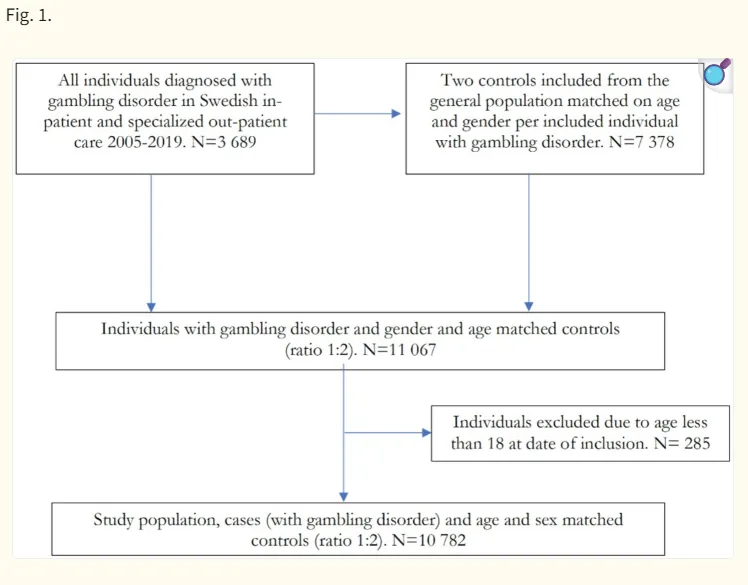
Case-control study of 3,689 individuals with gambling disorder found they died at a mean age of 50.5 vs. 57.7 for controls — a 7-year gap. Overall mortality was 3× higher. Suicide was the leading cause of death among male cases, accounting for 34.6% of deaths.
View on PubMed
Predicting Problem Gambling in Young Men: The Impact of Sports Gambling Frequency
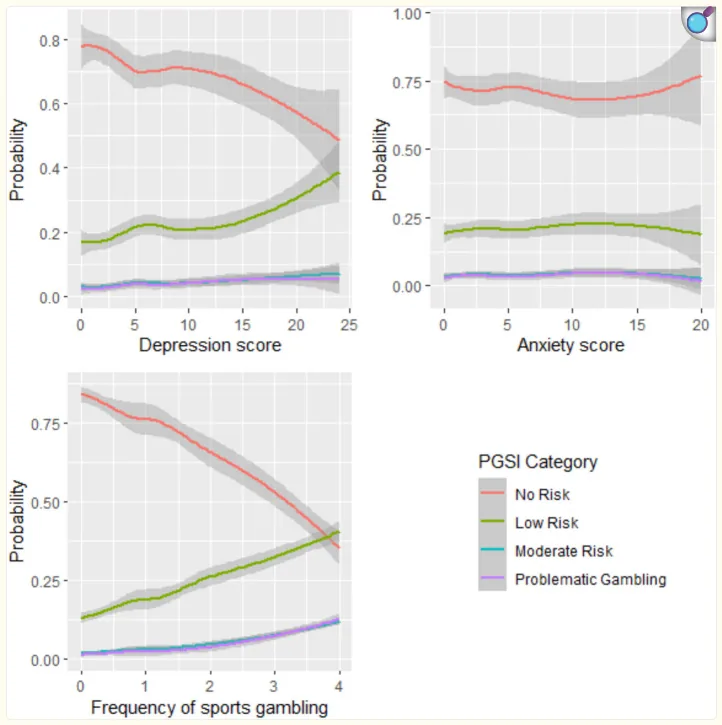
Longitudinal cohort study of 265 men aged 18–25. Each one-unit increase in sports betting frequency raised odds of problem gambling by 64%. Fantasy sports gambling raised odds by nearly 4×. Depression symptoms were also a significant predictor.
View on PubMed
Gambling in Online Gaming among Youth in Hong Kong: Does Internet Gaming Disorder (IGD) and Online Gambling Tendency Play a Role?
Original Paper investigating the relationship between Internet Gaming Disorder, online gambling tendency, and gambling behaviors among Hong Kong youth. 14.1% of secondary students met IGD criteria (16.4% boys, 9.5% girls). Examines how digital gaming engagement predicts gambling vulnerability.
View on Springer
Sports Betting Ads are Everywhere. That Could be a Public Health Problem
Commentary on the saturation of sports betting advertising since 2018 legalization. Tracks how sports-related gambling ads are associated with increases in perceived/actual gambling frequency, expenditure, unplanned gambling, and risk-taking behavior. Calls for public-health-oriented regulatory action.
View on Springer
Gambling-Related Cognitive Distortions Among Adolescents: A Gender-Based Analysis
Spanish cohort study of 209 adolescent gamblers (ages 14–18). Cognitive distortions increased with gambling severity and were higher among online gamblers. Women differed by modality (higher distortions with online gambling); men differed by severity. Argues for gender-sensitive prevention programs.
View on Springer
Regulatory Perspectives for Gambling in Brazil: are there Lessons that can be Learned from the UK's Experience?
Commentary comparing Brazil's newly regulated online gambling market (Law 14,790/2023) with the UK's mature regulatory framework. Identifies treatment access, advertising restrictions, and harm prevention as areas where Brazil could adopt UK-style safeguards.
View on Springer
(Mis)Comprehension and (Mistaken) Attractiveness of Financial Gambling Inducements among UK Bettors
Online experiment with 585 UK bettors. Participants underestimated welcome bonus wagering requirements by 33% (median estimate £500 vs actual £750). When worked examples were shown, the inducement was rated significantly less attractive. Qualitative themes: manipulative, economically worthless, requiring better regulation.
View on Springer
People with Gambling Disorder Five Times More Likely to Die by Suicide
First UK study using NHS data (1993–2023) to predict suicide among gambling disorder patients. Compared 92 people with gambling diagnoses who died by suicide to 2,990 who died from other causes. Gambling diagnosis was a stronger predictor of suicide than depression, schizophrenia, or alcohol use disorder.
View Study
Suicide and Attempted Suicide in Gambling Disorder: A Nationwide Case-Control Study
17.7% of individuals with gambling disorder displayed suicidal behavior compared to 1.6% of controls — suicidal behavior was 11× more common in gambling disorder patients. Suicide accounted for 25% of all deaths among those diagnosed with gambling disorder.
View on ScienceDirect
Pathways to Understanding Problem Gambling Among Adolescents
Investigates the interplay between ecological factors (gambling accessibility, media exposure), psychological factors (sensation-seeking, impulsivity), and cognitive factors (irrational gambling beliefs) in adolescent problem gambling. Provides a multidimensional model for prevention.
View on PubMed
Impulsivity and Online Sports Betting Behavior: Untangling the Causal Relationship
Longitudinal analysis found partial support for impulsivity as a driver of gambling disorder development. Specific impulsivity facets — impulsive choice and certain personality traits — were significantly associated with subsequent gambling disorder symptoms among online sports bettors.
View Article
How Gacha Gaming and Life Quality Shape Problem Gambling Risk
Cross-sectional online survey of young adults in Hong Kong found 51.3% of variance in problem gambling scores explained by stress, anxiety, monthly gacha spending, and number of gambling activities. Microtransaction users identified as the most susceptible group for problem gambling.
View on PubMed
Sports Gambling in the Americas: The Rise of Invisible Risks
Cross-continental review of sports gambling expansion across North and South America. Identifies "invisible risks" of online sports betting including normalized advertising, in-game micro-bets, and the rise of a new gambling disorder profile among young people aged 18–34.
View on PubMed
Gambling Disorder Comorbidity: A Narrative Review
More than 90% of people with gambling disorder have a diagnosable mental health condition — over 60% have three or more co-occurring disorders. Includes 4.4× higher risk of substance use disorder, 3× higher probability of major depression, and 8× higher risk of personality disorders.
View on PubMed
Growing Health Concern Regarding Gambling Addiction in the Age of Sportsbooks
Time-series analysis showing internet searches for gambling addiction help increased 23% nationally since sports betting legalization. State-level surges: Ohio +67%, Pennsylvania +50%, Massachusetts +47%. Online sportsbooks drove 61% more help-seeking than retail betting alone.
View on PubMed
Short-Term Effectiveness of Gambling Treatment in the Daily Clinic for Gambling Addiction
209 patients completed a 3-month intensive multidisciplinary outpatient CBT program in Zagreb. 76.1% achieved abstinence at discharge; 81.5% at 6-month follow-up. Large effect sizes across emotion regulation, depression, anxiety, and self-efficacy.
View Article
The Prevalence of Gambling and Problematic Gambling: A Systematic Review and Meta-Analysis
Comprehensive meta-analysis establishing updated global prevalence estimates for problem and pathological gambling. Confirms gambling disorder's association with depression, substance abuse, domestic violence, bankruptcy, and elevated suicide risk.
View on PubMed
Risk Factors for Gambling Disorder: A Systematic Review
Systematic review identifying key risk factors including being a young single male, financial instability, low education, and living alone.
View Article