
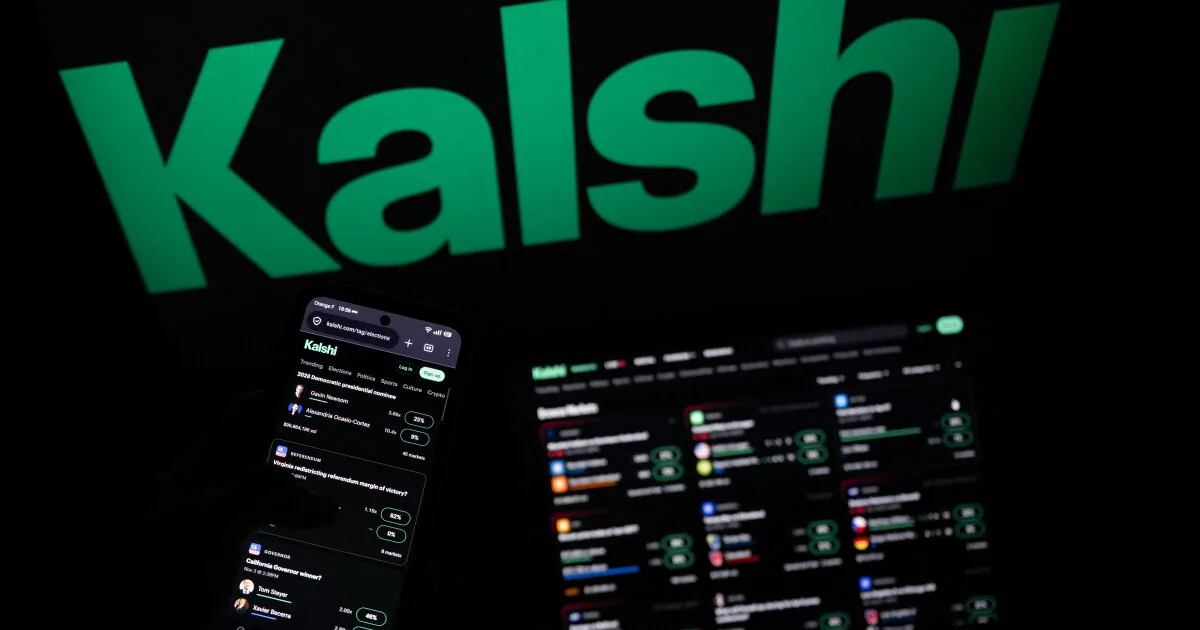
L.A. Therapists Are Seeing More Young Patients With Gambling Problems — They Blame Kalshi
For years the worry was the sportsbook — the app with the team logos and the same-game parlays. This story is about the next door down the hall. Prediction markets like Kalshi are legal at 18, marketed as ‘trading’ rather than betting, and they reach exactly the people who’d never have walked into a casino: college students, first-jobbers, kids on a parent’s login. When a clinician who runs a university gambling program says his intake is filling with 18-to-20-year-olds, that’s not a trend piece — it’s an early-warning siren.
The detail that stays with us is the $150,000 in college money gone in 18 months. That’s the arithmetic of a product built for speed — markets that never close, prices that move every few seconds, and a design that rewards checking again, and again, and again. Calling it ‘trading’ doesn’t change what it does to a nervous system, and the ‘is it really gambling?’ debate is cold comfort to a 20-year-old staring at an empty account. Whatever the regulators decide to call it, the people in these therapists’ offices are describing the same disorder we hear about in every meeting.
If you’re young and this reads like your last few months — the account you can’t stop refreshing, the losses you’re hiding, the money that was meant for something else — you are not the first person it happened to, and you’re not too young to stop. A free, anonymous online meeting is full of people who started exactly where you are. No account, no cost, no judgment — just a room where the refreshing stops.